
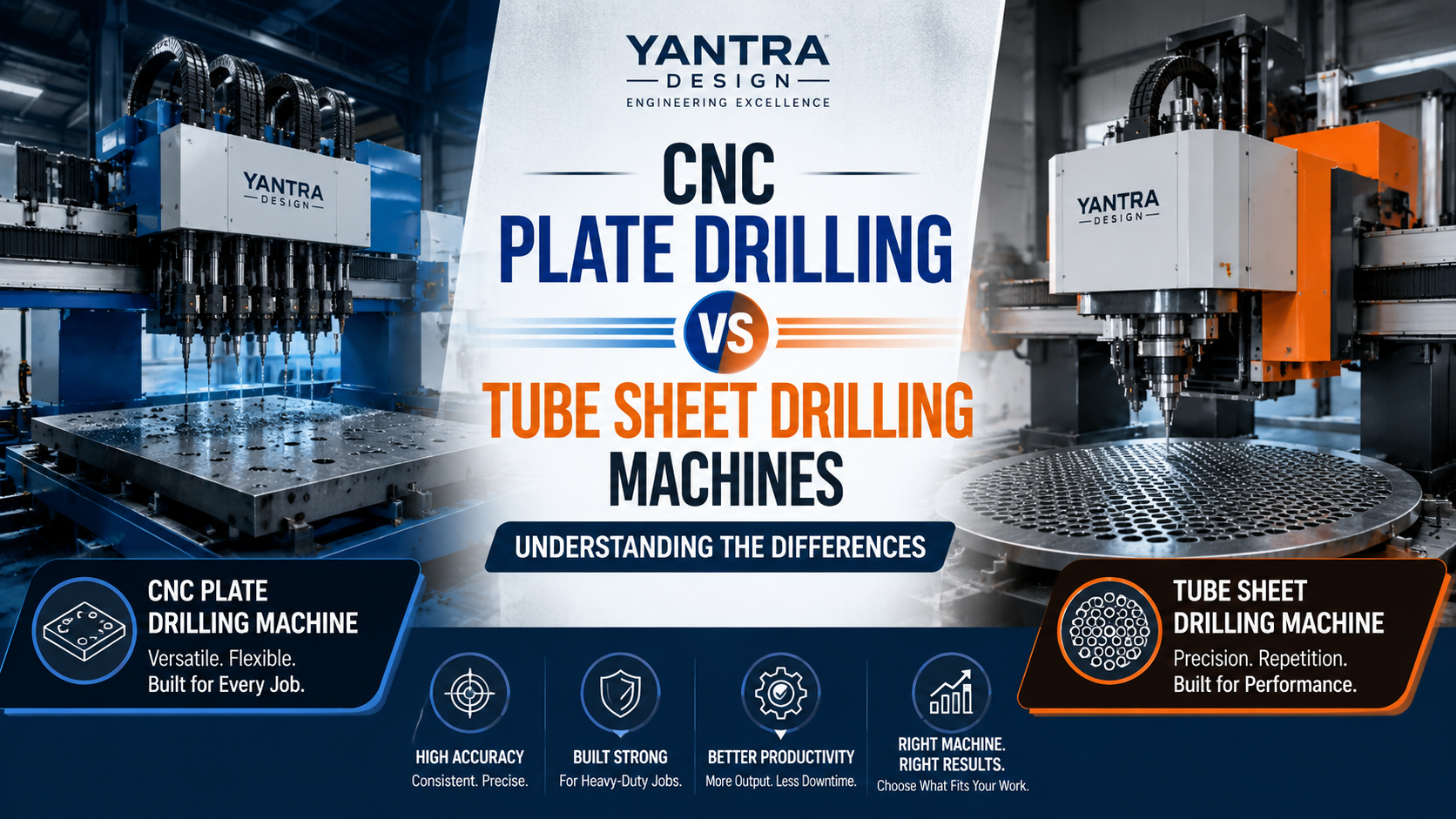
In heavy fabrication, drilling holes in thick steel is a job that demands the right machine. Two machines often come up in this space: the CNC plate drilling machine and the tube sheet drilling machine. They look similar and both drill thick plates, but they are built for very different jobs. Understanding the difference helps you invest wisely and quote work correctly. It also helps procurement teams match the right machine to the right product line.
This guide explains what each machine does, how they differ in purpose, hole patterns, accuracy, and applications, and how to decide which one fits your work.
Both machines drill holes in steel plates, but their goals are different:
The key difference is variety versus repetition. Plate drilling handles varied holes across many part types. Tube sheet drilling handles huge numbers of identical, precisely spaced holes in one large plate.
A CNC plate drilling machine drills holes in thick steel plates using computer control. It positions the drill automatically and produces accurate holes for a wide range of fabricated parts.
These machines are common in structural steel, heavy engineering, and general fabrication. They are flexible — the same machine can drill different hole sizes and patterns simply by loading a new program.
Typical Features:
Typical Work:
A tube sheet drilling machine is a heavy, highly accurate machine built for one main purpose: drilling tube sheets. A tube sheet is a thick plate with a dense pattern of holes that hold the tubes in a heat exchanger, boiler, or condenser.
These machines must drill hundreds or even thousands of holes in a single plate, all spaced to a precise pitch. The holes on one tube sheet must line up perfectly with the matching tube sheet and baffle plates at the other end, or the tubes will not fit.
Typical Features:
Typical Work:
Both machines drill thick steel, but they differ in several important ways.
Plate drilling is general-purpose, handling varied structural parts. Tube sheet drilling is specialised for dense, repetitive hole patterns in heat exchanger and boiler plates.
Plate drilling deals with scattered holes of different sizes and positions. Tube sheet drilling deals with a regular grid of identical holes set to a fixed pitch (often triangular or square layout).
A plate part may need a handful to a few dozen holes. A tube sheet can need hundreds or thousands of holes in a single plate.
Both need accuracy, but tube sheet drilling needs extremely tight hole-to-hole pitch accuracy, because every tube must align across the full assembly.
Plate drilling covers medium to thick plates. Tube sheets are often very thick, requiring deep-hole drilling techniques and careful chip control.
Plate machines often add tapping, milling, and marking. Tube sheet machines often add grooving inside holes for tube expansion.
| Factor | CNC Plate Drilling Machine | Tube Sheet Drilling Machine |
|---|---|---|
| Main Purpose | Varied structural plate holes | Dense hole arrays for tube sheets |
| Hole Pattern | Scattered, varied sizes | Regular grid, fixed pitch |
| Hole Count per Part | Few to dozens | Hundreds to thousands |
| Accuracy Need | High | Very high (tight pitch) |
| Plate Thickness | Medium to thick | Often very thick (deep holes) |
| Common Extra Ops | Tapping, milling, marking | Grooving, chamfering |
| Main Industries | Structural steel, fabrication | Heat exchangers, boilers, vessels |
Each machine serves its own set of industries, though they overlap in heavy engineering.
Drilling is one step in a larger process. In heavy fabrication, plates are usually cut to size first, then drilled, then welded or assembled.
A common flow looks like this:
When cutting and drilling equipment are well matched, parts move smoothly with less handling and rework — which is why fabrication firms plan their machines together.
Yantra Design is a manufacturer and supplier of CNC drilling machines built for Indian manufacturing and engineering industries, with strong expertise in plate drilling and CNC machining.
Whether your work involves structural plate drilling or more specialized deep-hole requirements, our team can help you identify the right solution — and plan it alongside your cutting and fabrication steps.
CNC plate drilling and tube sheet drilling machines both drill thick steel, but they are built for different worlds. Plate drilling machines offer flexibility for varied structural and fabricated parts. Tube sheet machines deliver the dense, ultra-precise hole arrays that heat exchangers and boilers demand.
Understanding the difference helps you invest in the right capacity, quote work accurately, and avoid buying more — or less — machine than you need. And when drilling is planned alongside cutting and finishing, the whole production line runs more efficiently.
If you are planning or upgrading your drilling capability, Yantra Design offers precise, reliable CNC plate drilling and machining solutions. Reach out to discuss the machine best suited to your production needs.
Join the ranks of satisfied clients who have experienced the difference of working with a leader in CNC drilling machine manufacturing.