
In today's manufacturing environment, precision, productivity and operational efficiency are no longer optional; they are essential for staying competitive. Whether you are producing steel structures, pressure vessels, flanges, tube sheets, machinery components or fabricated metal products, the quality of your drilling operations can have a significant impact on production timelines and overall profitability. This is why investing in the right CNC drilling machine is such an important decision.
A well-selected machine can improve machining accuracy, reduce manual intervention, increase throughput and help manufacturers maintain consistent quality standards. On the other hand, choosing the wrong machine can lead to production bottlenecks, higher operating costs and limitations that become increasingly apparent as business demands grow. With numerous machine configurations, technical specifications and automation features available in the market, selecting the ideal CNC drilling machine can be challenging. This buying guide outlines the most important factors manufacturers should evaluate before making an investment.
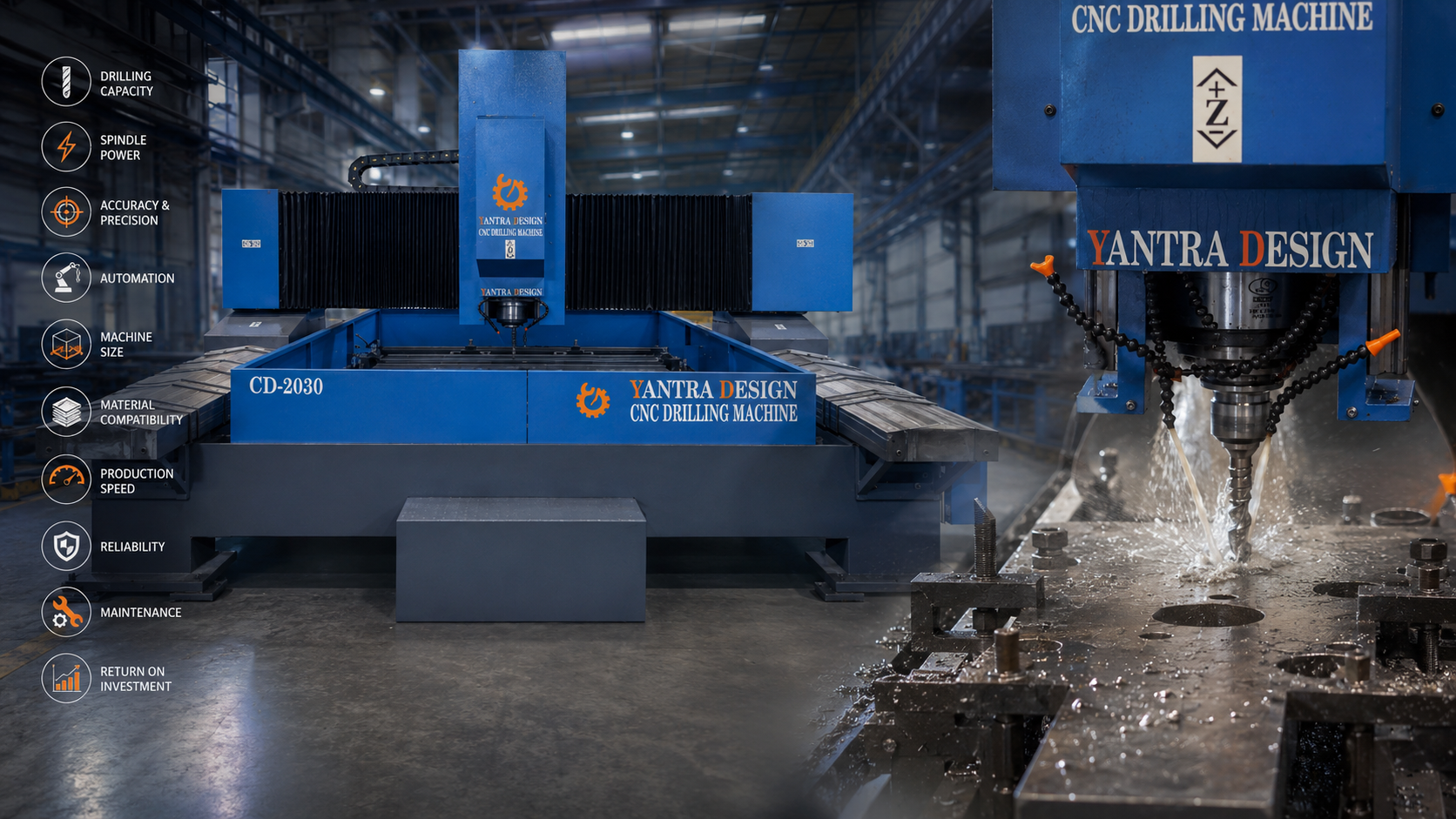
A CNC (Computer Numerical Control) Drilling Machine is an automated machining system designed to drill precise holes in metal and other industrial materials using computer-controlled programming. Unlike conventional drilling machines that rely on manual operation, CNC drilling machines automatically control spindle movement, feed rates, drilling depth and hole positioning according to pre-programmed instructions. These machines are engineered to perform drilling operations with exceptional accuracy, repeatability and efficiency, making them ideal for modern manufacturing environments.
CNC drilling machines can process multiple hole patterns, maintain tight tolerances and operate continuously with minimal operator intervention. Their ability to improve productivity while reducing human error has made them a preferred choice across various industrial sectors.
Major Industries That Rely on CNC Drilling Machines:
These machines are commonly used for drilling plates, flanges, tube sheets, disks, rings, structural components and other industrial workpieces where precision, consistency and production efficiency are critical.
As manufacturing industries continue to face increasing demands for higher productivity, tighter tolerances and faster production cycles, traditional drilling methods are becoming less efficient for modern production requirements. Manual and conventional drilling processes often require significant operator involvement, longer processing times and greater chances of human error, which can affect both product quality and operational efficiency.
CNC drilling machines address these challenges by combining automation, precision and consistency within a single system. By automating hole positioning, drilling depth and machining sequences, these machines enable manufacturers to achieve faster production rates while maintaining exceptional accuracy across large production volumes. For industries involved in steel fabrication, pressure vessel manufacturing, heavy engineering and industrial equipment production, CNC drilling machines have become a strategic investment for improving competitiveness and meeting growing customer expectations.
Key Reasons Manufacturers Prefer CNC Drilling Machines:
As a result, CNC drilling technology has become an essential component of modern manufacturing facilities seeking to improve productivity, maintain quality standards and support long-term business growth.
The first step in selecting a CNC drilling machine is understanding your specific production needs. Every manufacturing operation is different and the right machine should be chosen based on the type of workpieces, materials and drilling requirements involved in your day-to-day operations. Before making a purchase, consider factors such as:
For example, manufacturers processing large steel plates may require a CNC plate drilling machine, while companies producing heat exchangers may benefit from a dedicated CNC tube sheet drilling machine. Selecting a machine based on actual production requirements helps ensure better performance, efficiency and long-term value.
CNC Drilling Machine capacity is one of the most important factors to consider when purchasing a CNC drilling machine. The machine should be able to accommodate the largest workpieces you currently process while providing enough flexibility for future production requirements. Choosing a machine with insufficient capacity can restrict operational efficiency and limit the types of projects your business can undertake. When evaluating machine capacity, pay close attention to:
Selecting a CNC drilling machine with an adequate working area helps ensure smooth production, improved workflow efficiency and greater flexibility for handling a wide range of workpieces.
Drilling requirements can vary significantly depending on the industry and type of workpiece being manufactured. Some applications require small, high-precision holes, while others involve larger diameters and deeper drilling operations. Therefore, it is important to ensure that the machine's drilling capacity aligns with your production needs. Before making a purchase, evaluate the following specifications:
Selecting a CNC drilling machine with the appropriate drilling capacity helps ensure efficient machining, consistent performance and compatibility with both current production requirements and future manufacturing demands.
One of the biggest advantages of CNC drilling machines is their ability to deliver precise and consistent results. In industrial manufacturing, even minor deviations in hole positioning can lead to assembly problems, increased rework and unnecessary material waste. Therefore, evaluating machine accuracy is essential before making a purchasing decision. When comparing different machines, pay close attention to:
A CNC drilling machine with high positioning accuracy and repeatability helps improve product quality, minimize production errors and ensure reliable performance across high-volume manufacturing operations. It also enables manufacturers to maintain consistent machining standards and meet strict industry quality requirements.
A CNC drilling machine must be capable of operating continuously in demanding industrial environments while maintaining machining accuracy and reliability. The overall machine structure plays a crucial role in ensuring stable performance, especially when handling large workpieces and high-production workloads. Machines built with rigid structures offer:
Look for machines featuring heavy-duty cast iron structures, precision guideways and robust gantry designs that can perform consistently under demanding workloads. A well-built machine not only improves machining quality but also helps reduce maintenance requirements and ensures dependable long-term performance.
The spindle is one of the most critical components of a CNC drilling machine, as it directly influences machining speed, drilling accuracy and overall productivity. Selecting a machine with the right spindle configuration ensures efficient performance across different materials and drilling applications while helping maintain consistent machining quality. Its performance directly affects:
When evaluating spindle specifications, review factors such as spindle speed range, power output, torque characteristics and tooling compatibility. The correct spindle configuration can significantly improve machining productivity, reduce cycle times and support reliable performance in demanding manufacturing environments.
Modern CNC drilling machines offer much more than basic drilling capabilities. Features such as advanced CNC controls, automation functions and reliable technical support can significantly influence productivity, machine uptime and overall operational efficiency. Therefore, manufacturers should evaluate not only the machine's performance but also the technologies and support systems that accompany it. When comparing CNC drilling machines, consider factors such as:
A machine equipped with advanced automation and a reliable control system can help reduce manual intervention, improve process consistency and increase production efficiency. Equally important is strong after-sales support, which helps minimize downtime, ensures smooth operation and maximizes the long-term value of your investment.
Selecting the right manufacturer is just as important as selecting the right CNC drilling machine. A trusted manufacturer not only provides quality equipment but also offers technical expertise, application guidance and dependable after-sales support throughout the machine's lifecycle. Partnering with an experienced supplier can help ensure smoother implementation, better operational performance and long-term reliability. Before making a decision, evaluate the following factors:
Working with a reputable CNC machine manufacturer reduces purchasing risks, provides greater confidence in your investment and helps ensure long-term manufacturing success.
Choosing a CNC drilling machine involves more than comparing technical specifications. Manufacturers need a partner that understands industrial machining requirements and can provide reliable solutions that support long-term production goals.
Key Advantages of Choosing Yantra Design:
Yantra Design focuses on delivering CNC drilling solutions that help manufacturers improve productivity, reduce operational challenges and maintain consistent machining quality. By combining advanced engineering with practical industrial requirements, the company provides machines that are designed to support modern manufacturing environments.
Beyond machine performance, Yantra Design works closely with customers to understand application-specific needs and recommend suitable machining solutions. This commitment to customer success, technical support and manufacturing excellence makes Yantra Design a trusted partner for businesses investing in CNC drilling technology.
Investing in a CNC drilling machine is a significant decision, and even small oversights during the selection process can lead to long-term operational challenges. While many buyers focus on machine specifications and pricing, they often overlook factors that directly impact productivity, efficiency and future scalability. Understanding these common mistakes can help manufacturers make a more informed purchasing decision and maximize the value of their investment. Some common mistakes include:
Avoiding these mistakes can save significant time, money and operational challenges in the future while ensuring the selected machine continues to support business growth and production demands.
Purchasing a CNC drilling machine is a long-term investment that directly impacts manufacturing efficiency, product quality and business profitability. By carefully evaluating factors such as machine capacity, drilling capability, accuracy, automation features, structural stability and manufacturer support, businesses can make informed purchasing decisions that deliver lasting value.
The ideal CNC drilling machine is not necessarily the most expensive or feature-rich option; it is the one that best aligns with your production requirements, operational goals and future growth plans. With proper planning and evaluation, manufacturers can invest confidently in a solution that enhances productivity, improves machining accuracy and supports sustainable business success for years to come.
For manufacturers seeking reliable CNC drilling solutions, Yantra Design offers advanced machines designed to meet the evolving demands of modern industries. With a focus on precision engineering, robust machine construction and customer-centric support, Yantra Design helps businesses improve operational efficiency, maintain consistent machining quality and achieve long-term manufacturing excellence.
Join the ranks of satisfied clients who have experienced the difference of working with a leader in CNC drilling machine manufacturing.