
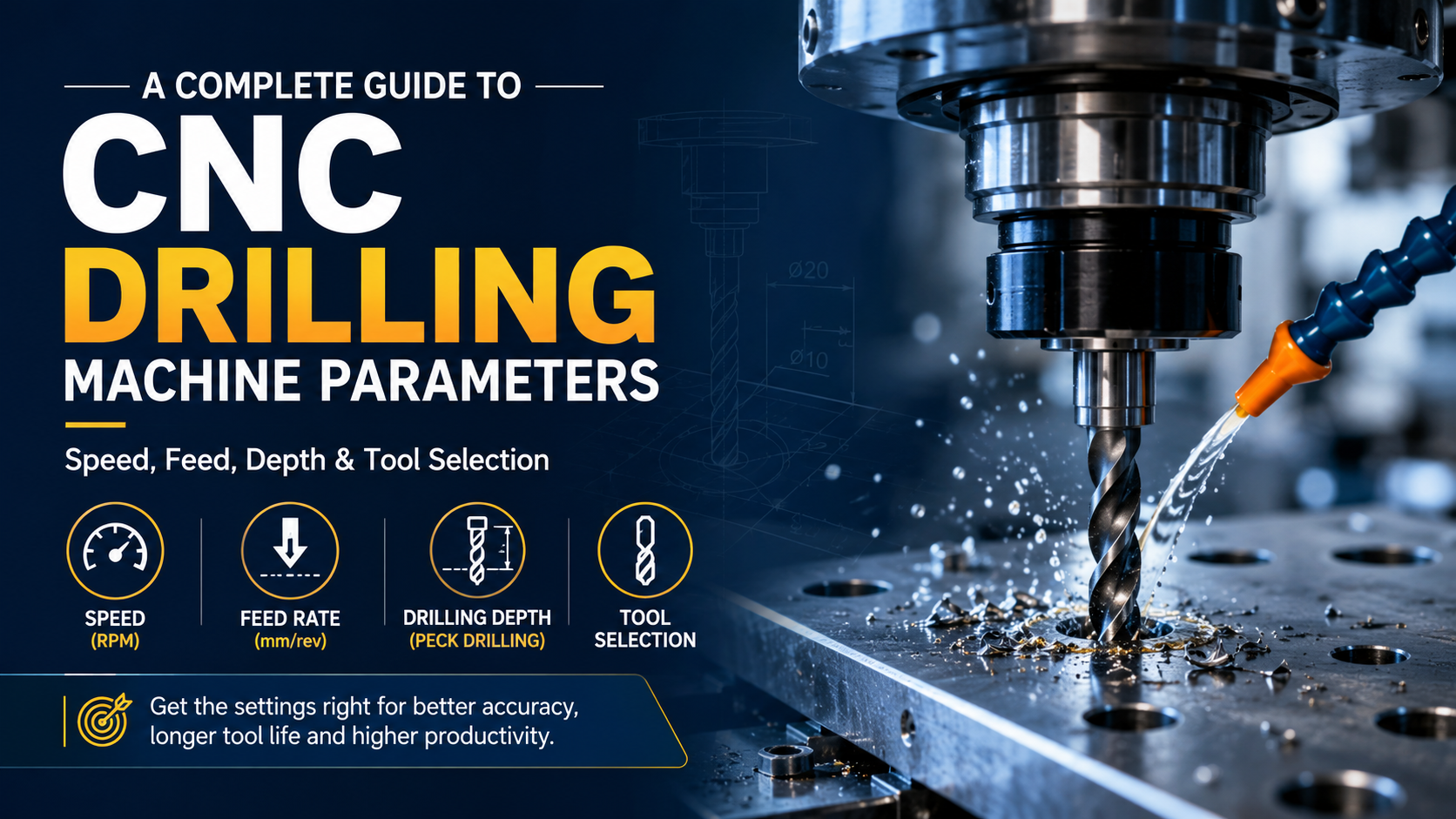
A CNC drilling machine is only as good as the settings it runs on. The same machine can produce clean, accurate holes or broken tools and rough finishes — the difference is the parameters.
Speed, feed, drilling depth, and tool choice control how a drill cuts into metal. Get them right and you get smooth holes, long tool life, and fast production. Get them wrong and you face overheating, snapped drills, poor finish, and costly downtime.
Many operators rely on guesswork or copy old settings without understanding them. That works until the material or drill changes — and then quality drops. Knowing how each parameter behaves lets you adjust with confidence for any job.
This guide explains the key CNC drilling parameters in simple terms. We will cover what each one means, how they affect the result, how to match them to the material, and how to choose the right tool. Whether you run light fabrication or heavy plate work, these basics will help you drill better and waste less.
Drilling parameters are the settings that control how a drill removes material. The four most important ones are:
These work together. Changing one affects the others, so good drilling means balancing all four for the material and machine you are using.
Cutting speed is the speed at which the drill's cutting edge passes through the material. It is usually measured in meters per minute (m/min). Each material has a recommended range — soft metals allow higher speeds, hard metals need lower speeds.
Spindle speed (RPM) is how fast the drill rotates. It depends on the cutting speed and the drill diameter, and is found with this formula:
RPM = (Cutting Speed × 1000) ÷ (π × Drill Diameter)
This means smaller drills spin faster and larger drills spin slower to keep the same cutting speed.
Why It Matters:
Example: drilling aluminium allows a high cutting speed because it is soft and clears heat well. Stainless steel needs a much lower speed to avoid hardening and tool damage.
Feed rate is how fast the drill moves into the material. It can be set as feed per revolution (mm/rev) — how far the drill advances each turn — or feed per minute (mm/min). The two are linked:
Feed per minute = Feed per revolution × RPM
Why It Matters:
The right feed depends on drill diameter and material. Larger drills and softer metals usually allow higher feed; small drills and hard metals need lighter feed. The goal is a steady chip flow — clean, curled chips are a sign the feed is well set.
Drilling depth is simply how deep the hole goes. Shallow holes are straightforward, but deep holes bring a problem: chips get trapped, heat builds up, and the drill can break.
A hole is usually called "deep" when its depth is more than about three to five times the drill diameter.
For deep holes, CNC machines use peck drilling. Instead of drilling in one continuous push, the drill goes in a short distance, retracts to clear chips, then goes deeper. It repeats this cycle until the hole is complete.
Benefits of peck drilling:
For thick steel plates, peck drilling is essential, which is why a quality CNC plate drilling machine handles deep-hole cycles smoothly.
Even with perfect speed and feed, the wrong drill will give poor results. Tool selection is about matching the drill to the job.
Drill Bit Material:
Point Angle:
Coatings:
Coatings extend tool life and reduce heat:
Choosing the right combination of material, angle, and coating makes a big difference to hole quality and tool cost.
Coolant supports all the parameters above. It controls heat, flushes away chips, and improves finish. Flood coolant, mist, and through-tool coolant are common options.
Without enough coolant, even good settings will cause overheating, faster wear, and rough holes — especially in stainless steel and deep holes.
The table below gives typical starting cutting speeds for HSS drills. These are general guides, not fixed values. Always adjust for your drill, coating, machine, and hole depth, and check the tool maker's data.
| Material | Typical Cutting Speed (HSS, m/min) | Feed Notes |
|---|---|---|
| Aluminium | 60–100 | High feed, needs good chip clearance |
| Brass | 35–60 | Free-cutting, moderate–high feed |
| Copper | 35–50 | Sharp tools, watch for grabbing |
| Mild Steel | 20–30 | Moderate feed, steady coolant |
| Cast Iron | 20–25 | Often drilled dry or with light coolant |
| Stainless Steel | 10–18 | Lower speed, firm feed, avoid rubbing |
Note: carbide drills can run at much higher speeds — often two to four times these values — when the machine and setup allow.
Getting parameters right is not just about avoiding breakage. It directly affects three things every shop cares about.
| Outcome | Good Parameters | Poor Parameters |
|---|---|---|
| Hole Quality | Smooth, accurate, low burr | Rough, oversized, burred |
| Tool Life | Long, predictable | Short, frequent changes |
| Productivity | Fast, fewer stoppages | Slow, more rework |
Balanced settings give the best mix of speed, finish, and tool cost — the sweet spot every operator aims for.
Avoiding these keeps quality high and costs low.
Correct parameters matter in every sector, but some feel it more than others.
Yantra Design is a manufacturer and supplier of CNC machines built for Indian manufacturing and engineering industries.
If your work also involves cutting, our team can help you plan a setup where every step works together.
Mastering CNC drilling parameters is the key to better holes, longer tool life, and faster production. Cutting speed, feed rate, drilling depth, and tool selection all work together — and balancing them for each material is what separates good drilling from costly rework.
The basics are simple: match the speed to the material, set a feed that produces clean chips, use peck drilling on deep holes, and pick the right tool for the job. Backed by proper coolant and a capable machine, these habits deliver consistent, high-quality results.
As CNC technology advances, machines increasingly manage these parameters automatically, making precision easier to achieve. But understanding the fundamentals still helps every operator make smart adjustments.
If you are planning or upgrading your drilling capability, Yantra Design offers precise, reliable CNC drilling and plate drilling solutions. Reach out to discuss the machine best suited to your production needs.
Join the ranks of satisfied clients who have experienced the difference of working with a leader in CNC drilling machine manufacturing.