
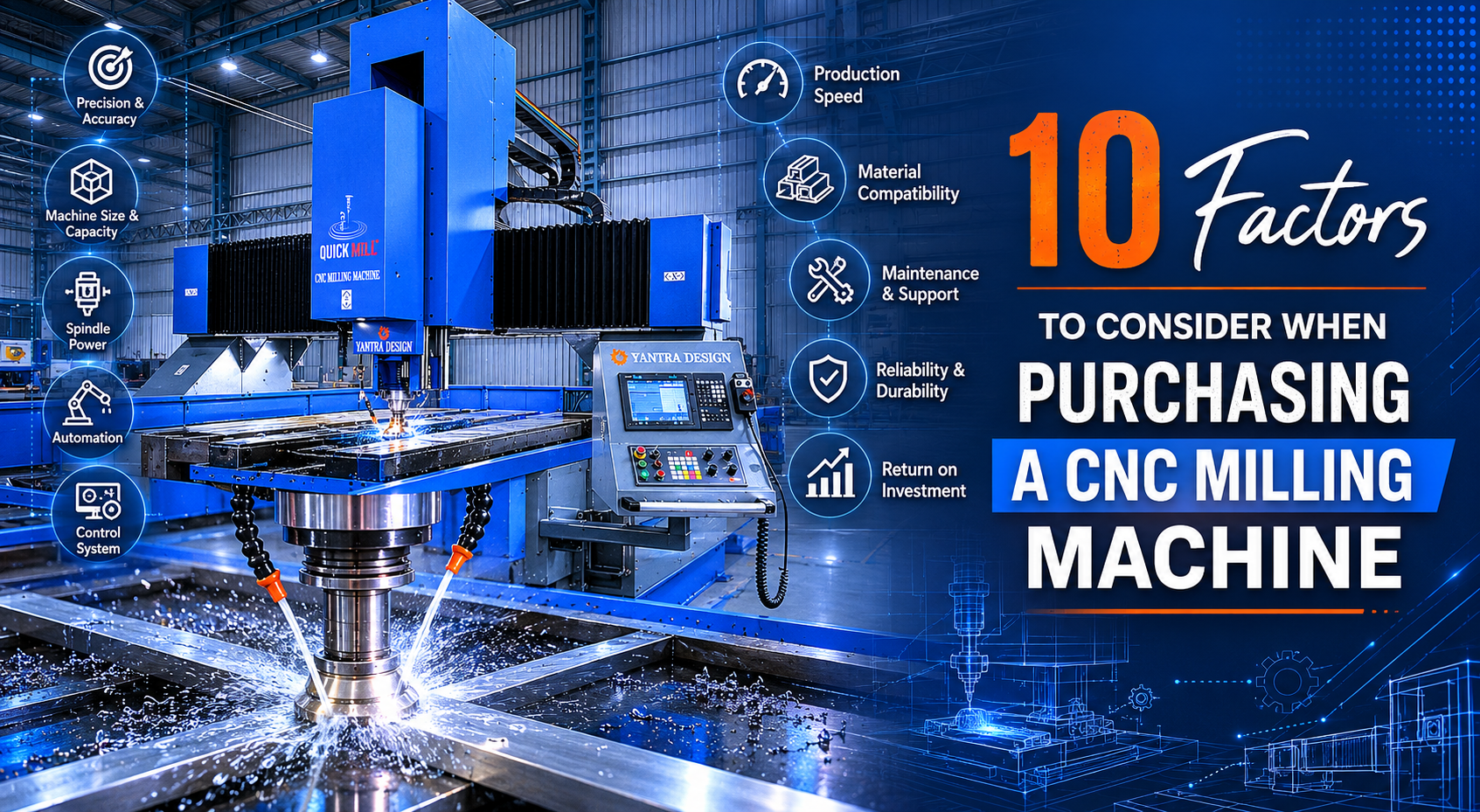
Investing in a CNC milling machine is a significant decision for any manufacturing business. Whether you're expanding your production capabilities, replacing outdated equipment or setting up a new machining facility, choosing the right machine can directly impact productivity, product quality and long-term profitability. With a wide range of CNC milling machines available in the market, selecting one based solely on price or specifications can lead to costly mistakes.
The ideal machine should align with your production requirements, machining complexity, future growth plans and operational budget. Before making a purchase, it is important to evaluate several key factors that influence machine performance, efficiency and return on investment. Here are ten essential considerations that can help you make an informed decision:
Before comparing machine, models or requesting quotations, take a close look at your production needs. The type of components you manufacture, material specifications, production volume and required accuracy will determine the kind of CNC milling machine that best suits your operations. For example, a company producing complex aerospace components will require a different machine configuration than a workshop manufacturing simple structural parts. Understanding your requirements from the beginning helps narrow down your options and prevents unnecessary spending on features you may never use.
One of the most overlooked factors when purchasing a CNC milling machine is the machine's working envelope. The travel range of the X, Y and Z axes should comfortably accommodate the largest components you plan to manufacture. Purchasing a machine that is too small can limit future production opportunities, while an oversized machine may consume unnecessary floor space and increase operating costs. Consider both your current production requirements and anticipated future projects when evaluating machine capacity.
Different industries require different levels of machining accuracy. Medical equipment manufacturers, aerospace companies and precision engineering firms often work with extremely tight tolerances where even minor deviations can affect product performance. Review the machine's positioning accuracy, repeatability and spindle performance. A machine that consistently maintains dimensional accuracy will help reduce rework, minimize material waste and improve overall product quality.
The spindle is one of the most critical components of a CNC milling machine. Its speed and power directly affect machining efficiency, surface finish quality and material compatibility. Machines intended for Aluminium, plastics and lightweight materials often require higher spindle speeds, while heavy-duty machining of steel and other hard metals may demand greater spindle torque and power. Selecting the right spindle configuration ensures optimal cutting performance and longer tool life.
Production volume plays a major role in machine selection. Businesses handling high-volume manufacturing require machines capable of operating continuously with minimal downtime. If your production schedule involves repetitive machining operations, investing in a machine with advanced automation features, automatic tool changers and faster cycle times can significantly improve productivity. For lower-volume production environments, a simpler machine may provide better value.
The CNC controller serves as the machine's operational brain. A reliable and user-friendly control system can simplify programming, improve operator efficiency and reduce training requirements. Modern CNC machines often integrate with CAD/CAM software, production monitoring systems and automation technologies. Evaluating software compatibility and future upgrade options ensures that your investment remains relevant as manufacturing technologies continue to evolve.
The structural integrity of a CNC milling machine has a direct impact on machining stability and long-term reliability. A robust machine structure is particularly important when machining large workpieces, handling heavy cutting loads and maintaining consistent performance in demanding industrial environments. Machines constructed with rigid frames and high-quality components are better equipped to handle demanding production environments. Look for machines with robust cast iron structures, precision guideways and durable mechanical assemblies. A well-built machine minimizes vibration, improves cutting stability and maintains accuracy over extended periods of operation.
Even the most advanced CNC machine requires periodic maintenance. The availability of timely technical assistance and replacement parts can significantly affect machine uptime and overall production efficiency. Before purchasing, evaluate the manufacturer's service network, spare parts availability and technical support capabilities. Downtime can be costly, particularly in high-production environments. Choosing a supplier with responsive service support and readily available replacement parts helps ensure uninterrupted production and reduces long-term maintenance challenges.
While the purchase price is important, it should not be the only factor influencing your decision. Many buyers focus on the initial investment while overlooking the long-term operational expenses associated with machine ownership. The true cost of a CNC milling machine extends beyond the initial investment. Factors such as energy consumption, maintenance expenses, tooling costs, software licensing fees and operator training should all be considered. A machine with a higher upfront cost may ultimately provide better value through increased productivity and lower operating expenses.
The reputation and experience of the machine manufacturer can significantly influence your ownership experience. A reliable manufacturer not only supplies quality machinery but also provides the expertise, support and long-term partnership necessary for sustainable manufacturing success. Established manufacturers typically offer better engineering quality, stronger technical support and greater long-term reliability. Research the company's industry experience, customer reviews, installed machine base and after-sales support capabilities. Working with a trusted manufacturer reduces purchasing risks and provides greater confidence in your investment.
Purchasing a CNC milling machine is a major investment and making the wrong decision can lead to increased operating costs, reduced productivity and long-term manufacturing challenges. Many buyers focus heavily on machine specifications and purchase price while overlooking critical factors such as future production requirements, service support and overall operating expenses. Understanding the most common purchasing mistakes can help manufacturers make a more informed decision and maximize the value of their investment. Some common mistakes include:
Avoiding these mistakes can save significant time and money over the lifespan of the machine while ensuring that the chosen CNC milling machine continues to meet operational requirements as the business grows.
Selecting the right CNC milling machine is not only about evaluating technical specifications, spindle speeds or machine dimensions; it is also about choosing a manufacturer that understands real-world machining challenges and delivers solutions designed for long-term reliability and performance. A machine may appear impressive on paper, but its true value lies in its ability to consistently meet production demands, maintain machining accuracy and support business growth over time. This is where Yantra Design stands out as a trusted partner for modern manufacturing industries.
With a strong focus on precision engineering, manufacturing efficiency and customer-centric solutions, Yantra Design provides CNC machines that are built to address the practical requirements of today's industrial environments. By combining advanced technology, robust machine construction and dependable support services, the company helps manufacturers achieve higher productivity, improved machining quality and greater operational confidence in their day-to-day production processes.
Key Advantages of Choosing Yantra Design:
One of the key strengths of Yantra Design machines lies in their robust construction. Features such as rigid cast structures, moving gantry systems, precision ball screw drives and high-capacity linear guideways contribute to excellent positioning accuracy, machining stability and long-term reliability. These design elements help reduce vibration and maintain consistent machining performance even in demanding industrial environments.
Beyond machine performance, Yantra Design emphasizes customer support through technical consultation, machine selection assistance, after-sales service and long-term maintenance support. This commitment helps manufacturers maximize machine uptime and achieve a higher return on investment throughout the equipment lifecycle. For businesses seeking a CNC milling solution that combines precision engineering, durable construction, advanced automation and dependable support; Yantra Design offers a strong foundation for efficient and future-ready manufacturing.
Purchasing a CNC milling machine requires careful planning and a thorough understanding of your manufacturing objectives. Factors such as machining capacity, precision requirements, spindle performance, software capabilities, production volume and service support all play an important role in determining the best machine for your business. Rather than focusing solely on initial cost, manufacturers should evaluate the overall value a machine brings to their operations.
By considering these ten factors before making a purchase, businesses can invest with confidence and select a CNC milling machine that delivers long-term productivity, reliability and return on investment. Partnering with an experienced and dependable machine manufacturer is equally important. Companies such as Yantra Design help manufacturers make informed equipment decisions by offering advanced CNC solutions, industry expertise and customer-focused support.
With a strong commitment to precision engineering, quality manufacturing and operational efficiency, Yantra Design continues to assist businesses across various industries in achieving reliable and cost-effective machining performance. Ultimately, the right CNC milling machine is one that not only meets current production requirements but also supports future growth, efficiency and long-term manufacturing success.
Join the ranks of satisfied clients who have experienced the difference of working with a leader in CNC drilling machine manufacturing.